A mixed-up storeroom
The replacement ball is a different weight. The new cones stack differently. Two batches use different colours and item descriptions.
Ask: can the same model be reordered?Singapore school PE buying guide
The lowest quotation is not always the lowest cost. Compare stock reliability, durability, sizing, consistency and after-sales support before you decide.
The real purchasing question
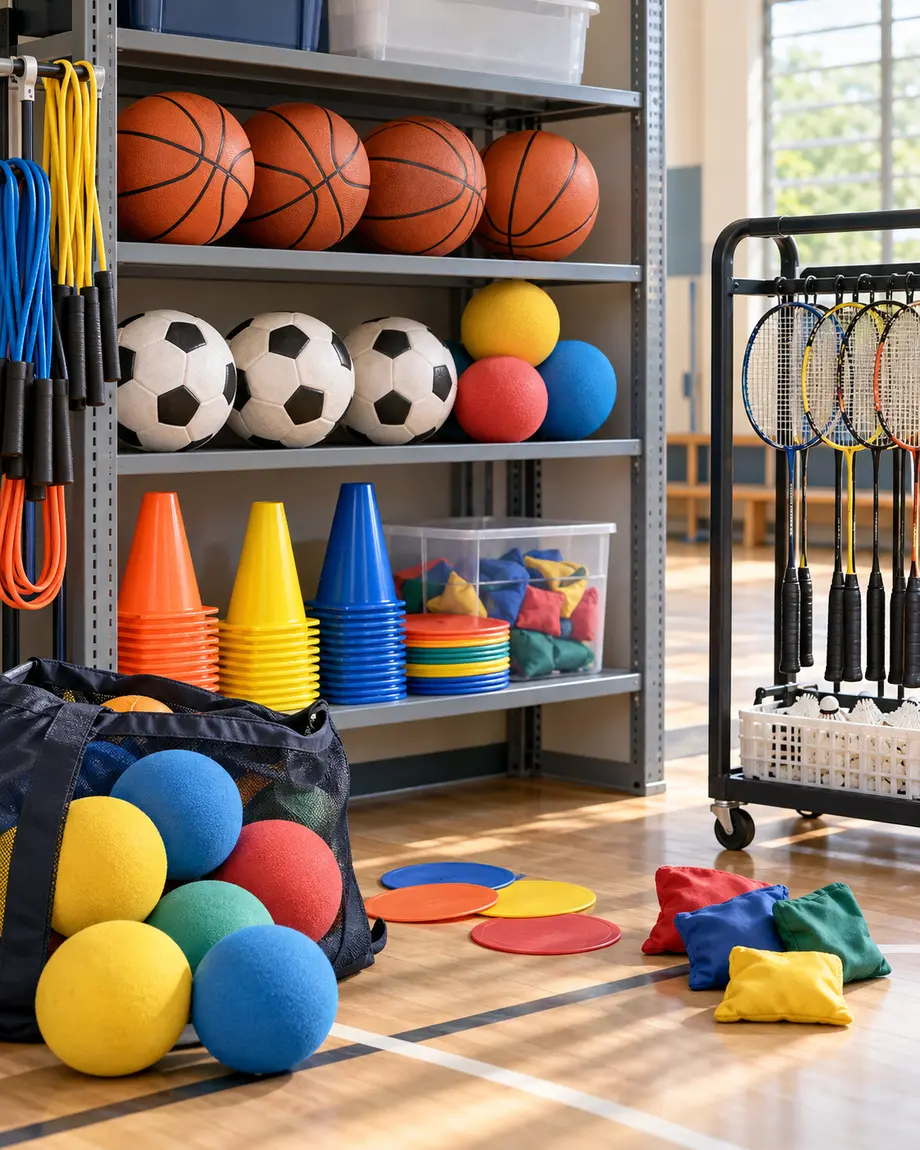
A school does not buy a ball, cone or skipping rope for a single lesson. It buys equipment that will be shared, dropped, stored, counted, loaned out and reordered across multiple cohorts.
That changes what “good value” means.
Three avoidable problems
Look beyond unit price to the friction created over the full life of the equipment.
The replacement ball is a different weight. The new cones stack differently. Two batches use different colours and item descriptions.
Ask: can the same model be reordered?A low price is useless if it arrives after the sports day or programme has already begun.
Ask: what is physically in local stock?Adult competition specifications are not automatically right for younger pupils, beginners or adapted activities.
Ask: who is this size and material for?The seven-point checklist
Use the same questions with every supplier. A clear answer is more useful than a broad promise.
Is the item physically stocked in Singapore, or ordered only after you confirm?
Will the same specification, model and item description remain available for future replenishment?
Check size, weight, grip, bounce, softness and visibility against the pupils and activity.
School equipment experiences higher frequency, rougher handling and heavier shared use than home equipment.
Examine materials, seams, edges, stability and relevant product information—not merely a catalogue photograph.
Know whom to contact when quantities are short, an item is damaged or a replacement is needed.
Compare useful life, replacement friction, delivery, lead time and staff time alongside the unit price.
Applying the same checklist
Javy Sports does not ask schools to rely on a vague “trusted supplier” claim. These are the operating advantages schools can evaluate.
Javy Sports reports that it has supplied to every MOE primary and secondary school operating in Singapore.
* Based on Javy Sports’ internal customer records as at September 2026. This describes historical reach, not the number of current customers, and excludes private and international schools.
One practical source
Every school has a PE storeroom. The difference is whether it remains easy to use, count and replenish.
A better definition of value
When teachers can recognise equipment, pupils receive predictable gear and administrators can reorder familiar items, the storeroom works better. That benefit rarely appears in the cheapest quotation—but it is felt for years.
Straight answers
If a supplier cannot answer these plainly, pause before committing the purchase order.
No. This website is created and maintained by Javy Sports. Javy Sports sells many of the products discussed and benefits commercially if a reader chooses Javy Sports. The guide aims to remain useful by disclosing that relationship and applying a visible set of buying criteria.
No. Price alone is not a reliable quality measure. Ask about the intended user, materials, construction, usage frequency and what happens if the product fails. Value comes from suitability and useful life together.
It should mean that the required quantity is physically available locally—not merely that a supplier can order it. Confirm the quantity and expected delivery date before issuing the purchase order.
Schools commonly replenish part of a set. Stable specifications reduce mismatched sizes, colours, weights and storage formats, while making future quotations easier to compare.
Yes. Send the item descriptions, quantities and required date to sales@javysports.com, call 6481 0412, or message 9144 7346 on WhatsApp.
Ready for the next quotation?